
Beyond the Leftovers: Building a Culture of Generosity
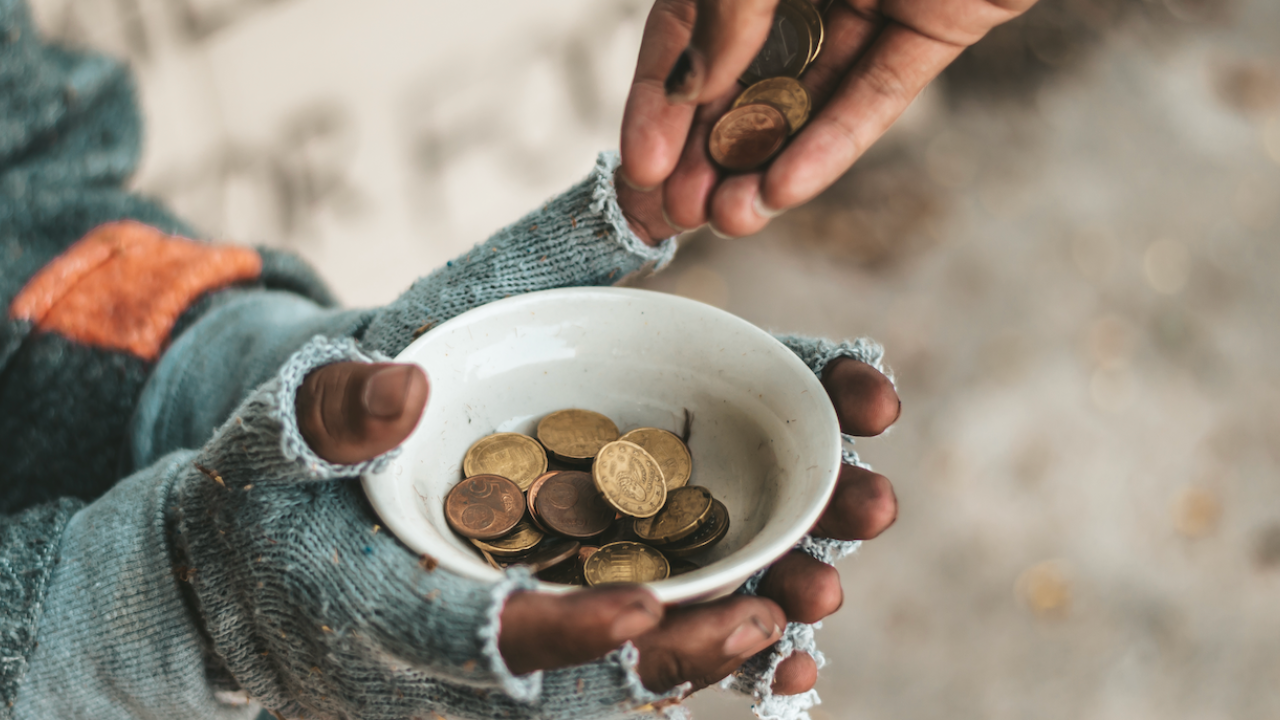
Here is a number that surprised me. The Chronicle of Philanthropy reviewed 2008 tax records from Americans who reported how much they gave to charity on their tax returns and compared how much of their spare money different people gave away. Of those earning $50,000 or more, the people making between $50,000 and $75,000 gave 7.6 percent of their spare money to charity. But the people making $100,000 or more gave only 4.2 percent.1
This does not include people who did not report their giving on their taxes, or anyone earning under $50,000. However, it does reflect an interesting pattern. Households with lower incomes gave a higher percentage away.
I expected the opposite. I thought that people who earn more would give a bigger share, since they have more available to give. These numbers don't give us any insight into why people spend money the way they do. They only report what happened.
Why would people with more money available give a smaller share?
I thought about that for a moment, and it brought to mind something I stumbled across one day in Paul's second letter to the Corinthians. It describes the very same puzzle.
Poor, and Overflowing
Paul was collecting money for fellow believers in need, and he wanted the church in Corinth to join in. To show them what that could look like, he pointed to a group of churches in Macedonia, in northern Greece. This is how he describes them:
"For in a severe test of affliction, their abundance of joy and their extreme poverty have overflowed in a wealth of generosity on their part. For they gave according to their means, as I can testify, and beyond their means, of their own accord." (2 Corinthians 8:2-3)
Read the first part slowly. They were in a severe test of affliction combined with extreme poverty. Paul is describing churches with almost nothing to spare. He doesn't tell us what caused the affliction. My guess is that it was financial hardship and possibly persecution. Yet this condition overflowed in a wealth of generosity.
How does that work?
Although we might miss it in English, two of those words, "abundance" and "overflowed," come from the same Greek root. Their joy was abundant, and that abundance overflowed into generosity.
Yet Paul credits that same overflow to their poverty too! How can joy abound in poverty? How can affliction and extreme poverty result in an overflow of generosity?
I hope that grabs your attention as it does mine.
The churches gave. They gave according to their means, and Paul can testify to that. But then they gave beyond their means — which sounds contradictory — and they did so of their own accord. Nobody had to talk them into it.
I find it striking that the pattern in the tax records resembles what Paul shows us about the churches in Macedonia. I am not saying that being poor makes anyone generous, and the numbers don't show that either. But if the amount you have doesn't decide how generously you give, what does?
Paul answers that question, but to hear his answer we have to back up one verse.
Where the Overflow Began
Here is the verse we skipped:
"We want you to know, brothers, about the grace of God that has been given among the churches of Macedonia." (2 Corinthians 8:1)
Before Paul says anything about their money, he points to God's gift of grace in those churches. Grace is a gift you don't earn or buy, and Paul says God gave it to them. So the generosity we just read about began as something they received.
Perhaps you think that because grace is an abstract concept, it can't cause an experience like joy, and it couldn't possibly materialize into giving money. But not so fast.
Paul made the connection explicit when he called the collection itself an "act of grace" (vv. 6-7, ESV). They received grace from God, and it manifested in joy and giving.
That's incredible.
Apparently, that flow of grace was quite effective for those churches. In verse 4, they actually begged Paul to let them give. (That's a great problem for a pastor to have!) And according to verse 5, they gave themselves first to the Lord.
Grace received almost explodes into these effects. Please let me give! I give myself to God! I have overflowing joy! Let me give even beyond my means!
And if I may observe one more layer of insight. Many people assume that giving is simply a response to a need. But in this passage, the need was merely the opportunity. It gave that joy a place to land. Paul never puts it in those words, but I think that's a fair reading. If so, many of us may have the order backward. Imagine how our generosity would transform if our giving were a response to overflowing joy because we've received incredible grace—and we're just looking for a place for it to land!
This kind of giving didn't come from what was left over. It came from what they had received. It also came from what they had surrendered.
Paul doesn't leave this as a story about Macedonia. Did you know that the word he used for their overflow turns up again a few verses later, when he speaks directly to the church in Corinth?
One Word, Three Places
Here is where it turns up.
"But as you excel in everything — in faith, in speech, in knowledge, in all earnestness, and in our love for you — see that you excel in this act of grace also." (2 Corinthians 8:7)
In the ESV, the word is "excel." In Greek, it is the same root Paul used for the Macedonians' overflow in verse 2, and he uses it twice in this verse. They excel in faith, in speech, in knowledge, in earnestness, and in love. He also puts giving on that list.
Let this really sink in. Paul doesn't treat money as a separate category, something different from faith and love that has to be handled on its own terms. Giving is a result of grace and is, therefore, connected to the kind of character that grace develops. A community that abounds in everything else is meant to abound in giving, too.
And like those old infomercials used to say, "But wait! There's more!"
That abundance word shows up in a third place, verse 14, now as a noun about need:
"...your abundance at the present time should supply their need..." (2 Corinthians 8:14)
Put the three places side by side, and you can see what the word is doing. In verse 2, joy overflows into generosity. In verse 7, Paul asks Corinth to abound in giving the way they already abound in everything else. In verse 14, that abundance supplies a need.
What starts in the heart ends in somebody's hand! Abundance flows from God, through His people, and toward another person's need.
This reordering of generosity also raises another question. One you may be asking right now. How much is enough? Am I expected to give beyond what is reasonable, like the Macedonians did?
I'm glad you asked.
The Measure of a Gift
Paul answers it right after his appeal to Corinth, where he says he is not giving a command (v. 8). The Macedonians are an example, not a quota. Nobody in Corinth was being pushed, shamed, or squeezed to break their own budget. The gift is measured in different terms:
"For if the readiness is there, it is acceptable according to what a person has, not according to what he does not have." (2 Corinthians 8:12)
"If the readiness is there" indicates that the measure protects willing hearts. It is not a loophole for someone who decides in advance to give only what is comfortable, nor is it meant to prevent those who want to go above and beyond.
Remember the line that sounded contradictory, that the Macedonians gave beyond their means? Here is how I read it. They didn't give what they didn't have. They gave out of what was theirs, and they chose to give more than a budget would have advised. I will call that sacrificial giving. It's the difference between asking "What do I have left?" and "What can I do without so that I might give more?"
That is the balance. Nobody should be pressured into sacrificial giving, and nobody should hide behind "reasonable" so generosity isn't actually generous. Sacrificial giving is not a higher requirement for the especially devout. It is grace and joy at work in abundance.
Paul never gives a number, so what are we aiming at?
Reordering Generosity
Everything we have looked at points to something I want to give a name. Call it a culture of generosity.
A culture is simply what a group of people treats as normal. In a culture of generosity, giving is normal, flowing from overflow and from a response to grace received. It does not come from leftovers. It is not a program or a policy. It is the habit of people who have received more than they can hold and go looking for places to pour it out. That is what Paul saw in Macedonia.
So here is my invitation. Build a culture of generosity in your business and, more importantly, in your own life, by reordering your idea of generosity.
Many of us were taught to start with the budget: pay everything else first, then give from whatever remains. I'm challenging you to start by measuring the grace you have received. Hint: you won't be able to put a number on that.
Let that bubble up into joy, and let that joy turn into an overflow of generosity — an overflow that notices the budget, but moves toward sacrifice. Consider what you have received before you consider what is left. Look for the needs in front of you, on your team, in your customer list, down your street, in your church. And give from what you can do without.
You already know where the need is, so start there, and let abundant joy drive what real generosity looks like for you.
Notes
- The Chronicle of Philanthropy, “How America Gives” (2012), based on 2008 IRS data for taxpayers who itemize their deductions and earn $50,000 or more. The figures cited here (7.6 percent of discretionary income for households earning $50,000 to $75,000, and 4.2 percent for households earning $100,000 or more) come from a summary of that study, “Do the Rich Give the Most to Charity?”, GRF CPAs & Advisors, June 7, 2013, https://www.grfcpa.com/resource/do-the-rich-give-the-most-to-charity/. The Chronicle’s original table was not consulted.
